Creative Director @ World Business Chicago, a public/private economic development organization chaired by Mayor Rahm Emanuel
Producer & DJ of experimental party music with a discography of over 50 records
Formerly: Webmaster @ Massachusetts College of Art & Design
Also: Photography | Cycling | Cooking & consuming farm-to-table food & drink.
Creative strategist, Web communications specialist, designer and music producer with a passion for new media and internet-based technologies.
Speaking Engagements:
ORD CAMP (2011) - New biz models for the music industry
DRUPAL BUSINESS SUMMIT (2010) - Launch of World Business Chicago website
MIDVENTURES LAUNCH (2010) - Gov 2.0/open data panel
Specialties: Project management, communications & public relations, website design/development & administration, graphic design, social media, music production, video editing
WEB DEVELOPMENT: HTML, CSS, JavaScript
CMS/BLOGGING: Drupal, WordPress, Joomla
CREATIVE SUITE: Photoshop, InDesign, Illustrator, Dreamweaver
VIDEO: Final Cut Pro, Avid Media Composer, iMovie
AUDIO: Ableton Live, Propellerhead Reason, Logic Pro, Serato Scratch LIve
World Business Chicago (WBC) is an economic development organization which leads business retention, attraction and expansion efforts, raises the city’s position as a premier global business destination, and serves as a resource for companies.
Chaired by Mayor Rahm Emanuel, WBC fosters private sector growth through the advancement of a business-friendly environment that attracts world class talent.
The Creative Director develops creative strategy and designs for print, web and other media.
Mashit.com is a music blog and record label specializing in global-bass music.
RECORDING ARTIST & PRODUCER WITH A DISCOGRAPHY OF MORE THAN 50
WORLDWIDE TOURING PERFORMER / DJ
RECORD LABEL FOUNDER
EVENT PRODUCER
MUSIC BLOGGER
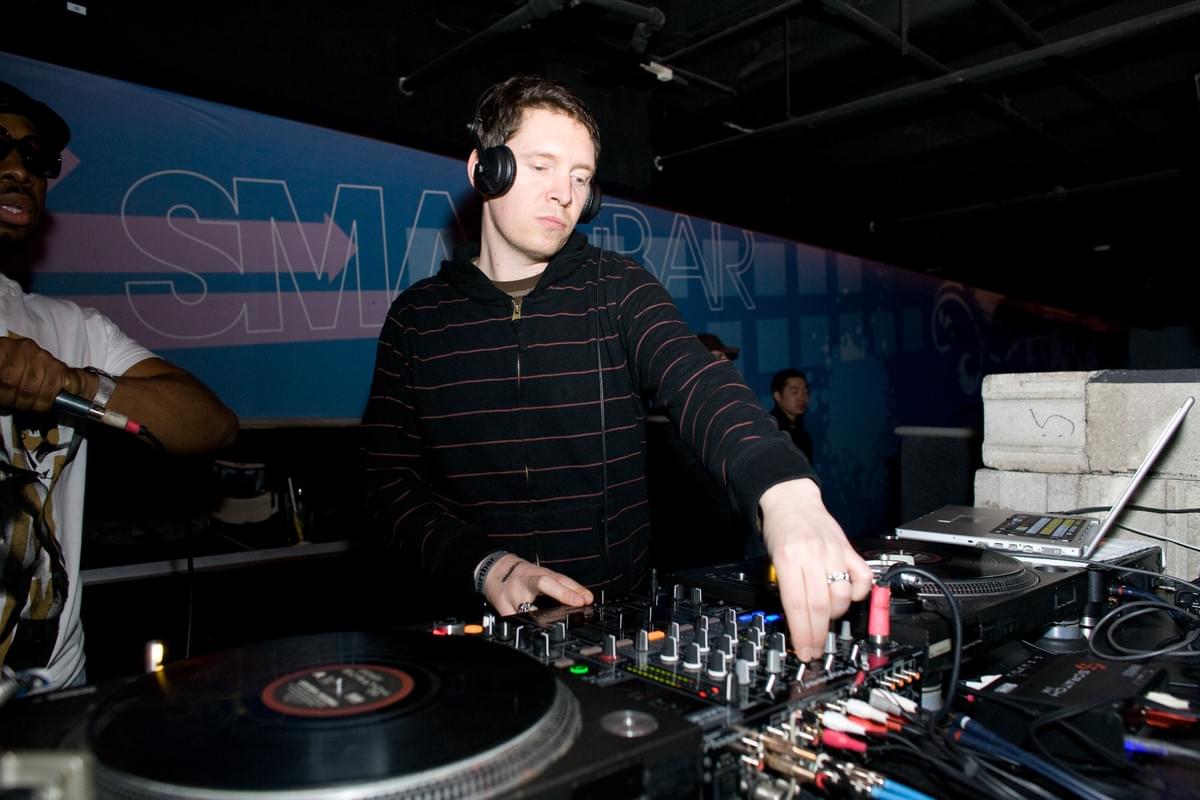
Record and perform as DJ C, a party scientist who's been known to weave audiences through frenetic genre-journeys.
Discography includes more than 50 records on labels like XL Recordings, Ninja Tune, Soul Jazz and others. Shared production credits with the likes of Diplo, Quincy Jones, MIA, and Gregory Isaacs; toured the U.S. with legendary Can frontman Damo Suzuki; performed at festivals worldwide with artists from Lee Scratch Perry, to Squarepusher, to The Orb.
DJ C's Mashit record label was featured as a "Label of the Month" by legandary BBC Radio 1 host, John Peel, and has released more than 20 records by artists like Chrissy Murderbot, Bong-Ra, and MC Zulu.
Co-founded the Toneburst Collective along with DJ /rupture, an event production group that staged adventurous multi-media extravaganzas in alternative venues. The events provided an early platform for storied underground artists like Kid606, Hrvatski, and Aaron Spectre.
Went on to co-found the Beat Research series of events along with DJ Flack. The weekly club-nights played host to some of the best DJs and producers of underground bass music in the world and gave a number of young luminaries their first gig. The long list of guests has included Eclectic Method, DJ Rashad, edIT (The Glitch Mob), Ghislain Poirier, Kingdom, and Plastician.
DJ C created the distinctive "Boston-bounce" sound before moving to Chicago, and now makes Chicago-inspired, stripped down and bass-heavy beats.
Resident DJ 3rd Fridays at Bouncement:
http://www.mashit.com/bouncement
Developing/deploying web content for this international foundation which supports creative people and effective institutions committed to building a more just, verdant, and peaceful world.
Development and maintenance of website for Innovating Social Change conference at Kellogg School of Management, Northwestern University
Lectured on music production in history of electronic music course
Lectured on music production in electronic music history and production course
The Beat Research weekly events at Enormous Room feature excursions into ultra-diverse dance-music.
Founding residents DJ Flack and DJ C (Jake Trussell) began Beat Research to present eclectic DJ sets and live performances. They often booked local guest DJs and live performers looking to break into the scene, as well as internationally known artists like DJ /rupture, Ghislain Poirier, Scuba, Plastician, Vex'd, edIT, Maga Bo, Pamelia Kurstin, Edu K, Al-Haca, Aaron Spectre and many more.
Since leaving the Boston area, DJ C has passed the baton to Wayne&Wax who now helms Beat Research alongside DJ Flack.
Lectured on audio production in multi-media, 2000. Lectured on music production in history of electronic music course, 2005, 2006, 2007
Designed and developed the College's first comprehensive website in 1999/2000 using HTML, and JavaScript.
Led initiatives, reporting directly to Director of Communications, including the acquisition of a new web content management system, and a system administrator to join the web team.
Project-managed the award-winning redesign of MassArt's website in 2002 which included the implementation of a custom-built content management system. Coordinated with college community to develop content for the site while managing student interns. Incorporated dynamic tools and content into the site, including a calendar system, video tours, and a news blog.
Provided guidance on web communications strategy for College President and departmental directors, and advised Communications and other departments about internet/technology strategy and purchases.
Over 2.5 years (June '01 - January '04) the Spectrum weekly events at Phoenix Landing provided one of the Boston area’s only venues for eclectic dance music.
Most weeks at least one guest performer was booked, breaking many new, local talents into the scene. Spectrum also played host to a large number of live/electronic performers and DJs from around the world, including artists like: Twiglight Circus Dub Sound System (Netherlands), Hrvatski, DJ /rupture (Spain), Aaron Spectre (Germany), Zod Records crew (Milwaukee), Broklyn Beats crew (New York City), and over 50 other DJs and performers.
Motion picture score for award winning documentary
Pprovided technical expertise on, and setup of audio and video equipment for Harvard classes and events
Here’s a blend of genres containing already blended genres. From electronic dub, to a series of tracks that wobble back and forth between hip-hop, dancehall and jungle, to pop-undergroud mashups, this mix, featuring tracks by Wildlife, Disrupt, Goulet, Krinjah, Vinyl Blight and more, is all over the map. Just how I like it!
Download: DJ C “The Blends” ->
Or listen on Mixcloud:
The Blends by Dj C on Mixcloud
When I heard M.I.A. was performing at the Superbowl halftime show it was almost compelling enough to get me to tune in for that oh-so-overblown of American past-times. I didn’t, partly because I knew if there was anything interesting to see it’d be all over YouTube before you can say YouTube.
Sure enough, the most talked about aspect of the Super Bowl this year — besides Clint Eastwood’s ode to American sticktoitiveness — was M.I.A.’s middle finger. It doesn’t sound very interesting on the surface but if there’s one thing M.I.A.’s really good at, it’s being controversial, and with one tiny little gesture she was able to whirl media spin rooms into a frenzy.
Meanwhile, M.I.A.s new video for her track Bad Girls had already been generating some controversy of its own. Whether it’s for vapid lyrics, or stereotypical Arab imagery, not everyone gives the track or the video a +1. But I tend to agree with this assessment in Albawaba In Defence of MIA’s ‘Bad Girl’ Arab-Bashing. Here’s an excerpt:
Bad Girls is surely not something new in the pop-world with Madonna and many before singing vacuous lyrics on ‘material’ feisty or just ‘naughty’ girl types. If ‘bad girls’ on this occasion signifies gun-touting or even, in being strewn over, and in, cars, criminal, girls in a country that prohibits them from driving (while filmed in Morocco it is distinctly meant to represent Saudi Arabia), then the video presents a distinct challenge to the stereotype of Arab subjugated women.”
Anyway, I find it to be a compelling piece of pop with an underlying sense of rebellion that invokes the kind of discussion which brings me back to the heyday of Public Enemy. It’s beautifully crafted in a way that truly paints M.I.A. as a bad girl in the eyes of both the east and the west. What’s your take?
The drawback for me was that I couldn’t easily find an instrumental version of the bangin’ beat by Timbaland protege Danja, so I decided to make one through the magic of editing.
M.I.A. Bad Girls (Instrumental) MP3
[See post to listen to audio]
And while I was at it I whipped up a little mashup featuring another of my favorite female vocalists, Yukimi Nagano from Little Dragon.
DJ C Bad Girls Scale it Back (ft. M.I.A. & Little Dragon) MP3
[See post to listen to audio]
That’s right, folks. Experimental party music is coming to Chicago. Nearly 8 years after DJ Flack and I began Boston’s Beat Research, the franchise is sprouting a brand new limb.
On the first and third Wednesdays of the month I’ll be be throwing down genre-blends with Jesse Kriss, John Tolva and various special guests at Villain’s in Chicago’s South Loop.
The Boston branch has hosted some of the best and brightest DJs and producers of underground bass music in the world, given a number of young luminaries their first gigs, and presented an utterly motley collection of tech-addled live performances. The long list of guests includes DJ Rupture, Kingdom, Eclectic Method, Ghislain Poirier, Vex’d, edIT, and Scuba.
Beat Research has been hard to match for Bostonians seeking out innovative sounds. Now Chicagoans can look forward to their own bi-weekly session for discerning dancers and enthusiastic head-nodders.
For more information, and to sign up for the Beat Research Chicago mailing list, mosey on over to BeatResearchChicago.com and follow our tweetings @beatresearch.
When I first heard the TB303 “acid” bass line sound I was blown away by its alien feel. The wobbly portamento tones sliding into each other struck me as an audible illustration of the mailable, bouncy nature of rubber.
I also remember when I first heard Fatboy Slim’s Rockafeller Skank I thought the vocalist was saying “Right about now the funk’s so rubber” and while that was a great way to describe the bouncy guitars in the track, it was an even better way to describe the elastic acid-breaks tracks I had been getting into at the time. So I was disappointed when I figured out the vocalist was not sharing my enthusiasm for rubbery sounds but instead was conjuring “the funk soul brother.”
Those acid sounds which developed in the ’80s Chicago house movement, and continued to evolve throughout the ’90s worldwide, are still a major influence on bouncy tunes today. I’m always a sucker for a good tweaked out acid line and this mix encapsulates some of my favorite rubbery tracks throughout the ages:
MP3 Download
DJ C – The Funk So Rubber ->
Tracklist
A couple of newsy bits flew by the radar today including:
“Don’t Believe The Hate: Skrillex Is Already The Next Big Thing…”
&
“James Blake is Not Feeling the U.S. Dubstep ‘Frat Boy Market‘”
It’s quite obvious that “Dubstep,” weather it’s the indie-rock version or the metal version, has seeped it’s way into the pop world.
So I was excited to find in my inbox on the very same day, some music that to me represents something closer to a direct descendant of the roots of dubstep:
Max Ulis’ soundtack to Illustrator, Tyler Fewell’s Seven:
Disclaimer: Listen to this on a system with large bass capacity.
A few years ago I was asked to do this remix of Suffocation Keep by The Slip. It was a fun challenge to make an electronic interpretation of their sweeping, melancholic, indie-rock tack, and I really liked the outcome, but alas, it was never released.
I added it on as the last track on my Umami album, but instead of selling it along with the rest of the album I decided to give it away as a free bonus track.
Listen and download
***** Ableton User Group 8pm-10pm *****
***** Push Monthly from 10pm-2am *****
Thursday, June 16
Beauty Bar
1444 W. Chicago Ave
Chicago, IL
Sets by:
DJ C [Mashit]
Lokua [Moment Sound]
Vapor Eyes [Boom Juice]
Shazam Bangles [Cutz on Cuts]
Preceded by:
The Chicago Ableton Live user group is starting up again for 2011 with a Free Ableton Workshop and The June Chicago Usergroup Meeting Thursday, June 16th from 8:00PM-10:00PM. Certified Ableton Instructors Thomas Faulds and Orville Kline will host and give presentations on cutting edge studio production and live performance techniques with Live, Max for Live, and Ipad Live control.
Abstract Science, Mashit.com & Subfix present an album release party for “Umami” by DJ C
Thursday, June 9
with
DJ C
MEGA MIKE
BOOGYMON
SAM GRAY
Tickets: FREE!
21 & Over
Doors: 10pm / Show: 10pm
Smart Bar
3730 N. Clark St.
Chicago, IL
Available from these and other fine music download outlets: iTunes | Juno Download | Amazon MP3 | eMusic | DJ Download | Satellite Records | 7Digital | Napster | Rhapsody
Please join us for a free Umami album release party at Smart Bar in Chicago, June 9.
They call it Boston Bounce but we call it banging. A bouillabaisse of b-more, dubstep & uk bass, a gleeful disregard for genre and rules. Uniquely American & awesome
The sense of fun and humor that pervades the tracks is a welcome break from all the moody and dark sounds more typical in the bass scene”
DJ C has to be one of the best but most under-exposed artists out there. From Boston and now Chicago he is one of those rare artists whose every production is top notch, can’t find a bad track under his name. I have been dropping heavy tracks off his Sonic Weapons album in my sets for years, these things are party monsters that still manage to be smart and intricate. His remix of Gregory Isaacs “Gone a Jail” on the Shockout label and his “Let it Billie” 7″ are two of the favorite records I own. The man himself has a new album out called Umami, check it, dig it, buy it and support great music!”
A real journeyman of house, garage, funky and beyond, DJ C shows how he’s able to conquer a variety of sounds on this new full-length album… With future-funky rhythms underscoring big tunes like “Nu Strut”, “Blaze” and the lethally minimal brilliance of “Whistler”, there’s also slower beats to enjoy, such as “Dear John Bounce” which flits between jump-up jungle and slow, punchy dancehall. With London don The Heatwave joining C on “Change” and Sub Swara hooked up on “Belgrade”, this is a belting album, replete with some of the baddest beats out there at the moment.
Party scientist & beat producer, DJ C is known far & wide for his Boston-bounce sound, but he’s now called Chicago his home for the past 4 years and the influence of that historical home of house music, those fertile fields of footwork & juke, that booming base of booming bass, has seeped stealthily into his subconscious. Add this new layer to DJ C’s eclectic signature sound and this album equals an irresistibly fresh sonic flavor. From dubstep & club bangers to ravey dancehall anthems; from balkan to bhangara to baile, DJ C mashes it all into the deliciously varied and delectably danceable Umami.
DJ C’s new album Umami comes out May 31. Between now and the end of the month we’re going to give out each of the 17 tracks on the album for free, but each download will only be available for one day. Follow Mashit on Twitter to find out how to get each day’s download. In the meantime, give Umami a listen here:
DJ C – Umami
Party scientist & beat producer DJ C is known far & wide for his Boston-bounce sound, but he’s now called Chicago his home for the past 4 years and the influence of that historical home of house music, those fertile fields of footwork & juke, that booming base of booming bass, has seeped stealthily into his subconscious. Add this new layer to DJ C’s eclectic signature sound and this album equals an irresistibly fresh sonic flavor. From dubstep & club bangers to ravey dancehall anthems; from balkan to bhangara to baile, DJ C mashes it all into the deliciously varied and delectably danceable Umami.
Mayor Rahm Emanuel and World Business Chicago announced a new fellowship program [this week]. It's designed to have some of Chicago's "best and brightest" younger professionals in the private sector lend their talents to the city for a few months.
Mayor Rahm Emanuel and World Business Chicago announced a new fellowship program yesterday. It's designed to have some of Chicago's "best and brightest" younger professionals in the private sector lend their talents to the city for a few months. Read the rest on WBEZ's website ->
The Brookings Institution and the National Endowment for the Arts recently hosted an event dealving deeply into data around the affects of the Creative Class on Economic Development.
“Arts and culture are essential to attraction and retention of talent,” said Bruce Katz, Vice President and Founding Director of the Metropolitan Policy Program at the Brookings Institution during his opening remarks. The event — jointly hosted by Brookings and the National Endowment for the Arts (NEA) — was titled “The Arts, New Growth Theory, and Economic Development.” A group of prominent economists and academics presented research papers delving deeply into various data to shine a light on questions around the “creative class” and its effects on economic development.
Does a vibrant cultural landscape attract and retain a talented workforce? Do arts and culture spur economic growth or does economic growth spur arts and culture? Do “creative clusters” have an effect on business innovation? The research attempted to answer these questions, but some of the studies were more conclusive than others. Here are a few of the insights that I gleaned:
Professor Bob Root-Bernstein of Michigan State University presented a study showing that science and technology professionals are much more likely to also practice arts and crafts than the general public. The research also suggested that investing in arts and crafts builds innovative and entrepreneurial capacity over a lifetime. That study — combined with one presented by Professor Stephen Sheppard of Williams College which showed that wealthier, more highly educated people tend to be more supportive of the arts — suggests that talented workers, that business so desire, demand a vibrant cultural landscape and thus want to live in places where that landscape exists. PDFs: Slides | Paper
The chicken-or-egg question of whether arts and culture spur economic growth, or vice versa, came up repeatedly over the course of the day, but there was no conclusive answer. Perhaps it’s a virtuous cycle in which artists blaze new paths that lead to growth in under-developed urban areas, and cultural programs help to attract a talented workforce that’s so essential to growing businesses, while at the same time, the affluence generated by economic growth creates new classes of arts enthusiasts willing to support culture in their community.
In both Boston and Chicago I’ve lived in neighborhoods that evolved from decay to hot-spot over a number of years, and in both cases the redevelopment began as artists moved in for the affordable live/work space. Eventually galleries sprouted up, then cafés and boutiques, and inevitably chain stores and loft condo-conversions. This phenomenon can be seen repeatedly across many cities.
Assistant Professor Jenny Schuetz of the University of Southern California spoke about the SoHo and Chelsea gallery clusters in New York City. Her study fell short of pointing to artists as the drivers of those developments, but it seems clear to me that SoHo was one of those locations to which artists came looking for affordable live/work space in the early ‘70s. Chelsea’s development was apparently driven by the need for larger spaces to store artworks. The vast amount of affordable warehouse space was first used for storage and then began to open up to the public as gallery space. The combination of those galleries and the new Highline trail — an architectural and urban design marvel built on an old raised train bed — has turned Chelsea into another one of those hot-spots, as fabulous new restaurants and shops flock to the new destination. PDF: Paper
Mr. Katz took the concept of culture as trail-blazer a step farther by suggesting that cultural exchange between cities is critical as a platform that can lead to broader trade. World Business Chicago recently gave life to this idea when some of our business development directors traveled to Moscow in partnership with the Chicago Symphony Orchestra (CSO) in order to make business connections. The CSO’s immense cultural stature made the international inroads that gave our business ambassadors a firm platform to work from.
Then there’s the innovation question. Rocco Landesman, Chairman of the NEA, in his opening remarks said that Mr. Katz was one of the first people he met with upon his arrival in D.C. and was excited that they found a way to collaborate on this event in order to underscore the relationship between the arts and the "real world." The crowd chuckled as Mr. Landesman alluded to the fact that the arts and artists are often not taken seriously as economic drivers. The popular perception of artists is that they don’t like or understand business. In reality though, artists are entrepreneurs by necessity, and if not running their own creative business, they’ll often wind up as embedded creative professionals working in industries outside a creative cluster. As Creative Director at an economic development agency, I would consider myself in this category.
But what does constitute a creative cluster anyway? Designers often develop new products as entrepreneurs at innovative startup businesses that wouldn’t necessarily be seen as part of a creative cluster. Are the software coders developing new tools not also creatives?
According to Alan Marco, Deputy Chief Economist at the U.S. Patent and Trademark Office, 5% of inventors are also designers, while 40% of designers are also inventors. I found this to be an interesting stat, but in the end, both designers and inventors are innovators. They’re ideas people looking to solve problems. They have the potential to create the products of the future. This cross-talk between creative clusters and other industries is part of an innovation ecosystem that will lead to future economic growth.
Mr. Katz also pointed out the impact that visual design has had on our everyday lives over the past few years. Perhaps the most evident example of this is in the powerfully simple user interfaces that Apple builds in to their extremely popular devices. But this aesthetic is seeping into every area of design as the public becomes increasingly used to aesthetic and functional beauty. If your product doesn’t make life more pleasant for the user you may as well throw in the towel.
Since the opportunities for creative problem solvers seem to be growing exponentially, we’d be wise to prepare the workforce of tomorrow to think creatively. Unfortunately, it seems that more often than not, our current educational system rewards those who learn standardized test answers more than those who develop their own questions.
Clearly creatives play a big role in driving economic growth, but there’s been very little research done in this area, which is why this Brookings/NEA event was so interesting. All of this original research taken together shows that the study of culture’s affects the economy is an important one. Some of the research presented seemed inconclusive but there was one common theme among the presenters: this it just the beginning; much more work needs to be done in this area.
Video and audio recordings of the entire event are available online ->
--
Images
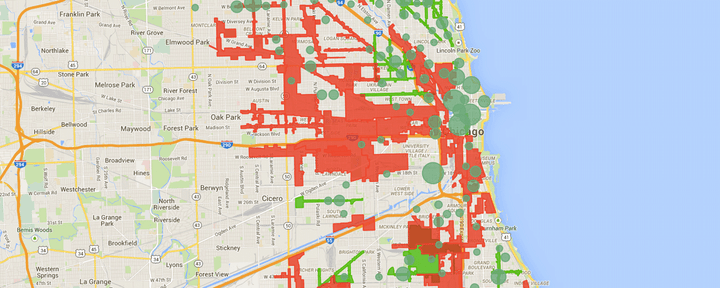
We built our Site Selector web-based mapping tool using open-source technology allowing us to easily add geo-data, and end-users to intuitivly toggle layers on a map. For example, universities, industrial districts, and commercial real estate can be added so the user can get a feel for which areas of the city have a convergence those things. In this blog post I discuss a bit about the process of building the tool.
Shortly after I began working at World Business Chicago I started to think about ways that we could improve our web presence and what tools we might build to enhance our mission. While researching economic development organizations in other locations, I began to notice web-based mapping tools that included real estate, incentive, and other data to help companies with their decisions about where best to locate in their area.
I wondered if this was the sort of feature that might be useful for our site and I began asking members of our team and their clients. There was interest, but also skepticism about whether it would work in a market as large as Chicago.
Liz Jellema, our Director of Research, was the next person to join the WBC staff after me and, interestingly, when she came on board she independently noticed these tools and wondered if they’d be useful. So together with our Director of Technology Development, Dan Lyne, we formed a task force to figure out how to implement such a tool of our own.
We spoke with interested parties in City Hall, commercial real estate and site selection professionals, and firms who provide these mapping tools for other municipalities. After weighing all the options we came to the conclusion that we could work with our web development team at Palantir.net to develop this sort of tool in-house, on the open-source Drupal platform that already powers our website. This would save us money, allow for user experience design control, and for the flexibility we’d need to continue to build in new functionality as we receive feedback from our users.
Using the Google Maps API, Open Layers and some of Palantir’s coding wizardry, the tool that we call Site Selector took shape. Now we can easily add geo-data to the tool and end-users can intuitively toggle layers on the map. For example, universities, industrial districts, Enterprise Zones, and industrial real estate can be added as layers and the user can get a feel for which areas of the city have a convergence those things.
Many of the map layers are from the City of Chicago’s Data Portal where hundreds of datasets are published with more being added all the time. Commercial real estate listings proved to be more difficult find. There are various sources out there but we couldn’t find anything that would be easily publishable as a geo-feed in our tool, until we came across Rofo.com. They’re a web-based service that allows commercial realtors to publish listings, and makes it easy and free for site hunters to search for what’s available. We’ve built a partnership with them in which they provide us with a free geo-feed of their available listings in Chicago. Their listings featured in Site Selector then link back to Rofo.com, raising awareness of their product. The feed certainly doesn’t encompass everything on the market but it’s a good start and we encourage those who have listings they’d like to see in Site Selector to publish them with Rofo.
We’ve already received some great feedback and ideas about new features we could add to Site Selector and are looking forward to receiving more. Please let us know what you think.
Here's a video overview of how it works:
The company that created the most jobs on the Inc. 5,000 this year is in Chicago, and overall Chicago is the #3 top job creating metro.
The company that created the most jobs on the Inc. 5,000 this year is in Chicago. SeatonCorp created 14,680 jobs.
Chicago is also an Inc. 500 “Hot Spot” with 15 companies that made the list.
Over all, Chicago is the #3 top job creating metro and Illinois is the #3 top job creating state. Here's the full list of all the Chicago metro area companies who made the 2011 Inc. 5,000 list.
Last week World Business Chicago hosted a delegation of visiting journalists from the United Nations Press Corps. The global contingent of reporters came from Chinese newspapers, Japanese magazines, Swedish public radio and more. We took them on a behind-the-scenes tour into the exciting world of Chicago’s innovation ecosystem, including Tribeca Flashpoint Media Arts Academy, 600 West Chicago (home of Groupon & Lightbank) and the startup incubator, Excelerate Labs.
Last week World Business Chicago hosted a delegation of visiting journalists from the United Nations Press Corps. The global contingent of reporters came from Chinese newspapers, Japanese magazines, Swedish public radio and more.
At Tribeca Flashpoint, CEO, Howard Tullman wowed the group with a sophisticated presentation of the technologies available to students and teachers at his school. The journalists asked questions about whether the technologies developed there are commercialized and what kinds of jobs the students get after graduation. Tullman explained their tech commercialization process and discussed the school’s industry connections with Hollywood, major videogame companies and more.
At 600 West Chicago we were given a tour of the former Mongomery Ward Catalog Warehouse which, when it was built over 100 years ago, was the largest concrete structure in the world.
While we were there we had an opportunity to meet with the co-founder and Executive Chairman of one of the most prominent companies at 600 West; Groupon. Eric Lefkofsky (also a co-founder of Groupon’s parent company, Lightbank and a WBC board member) sat down with us to discuss a few of his ideas about business. Our meeting came at an interesting moment as Groupon is in a “quiet period” leading up to their initial public offering of stock.
After touring through some of the Lightbank companies we headed over to Infinium Capital Management, a financial trading startup also located at 600 West. Their huge space is filled with hundreds of traders watching trades on thousands of monitors. It’s an awesome sight.
The final stop on our trip was Excelerate Labs, a Chicago-based startup incubator currently in the middle of launching their second class of companies. Each year Excelerate culls though hundreds of applications to find 10 innovative companies that they think have what it takes to succeed. The companies are given work space, $25,000 and access to an incredible list of mentors. Last year 8 of the 10 companies received outside funding after completion of the program and 9 of the 10 are still running. It’s a great track record for the new program.
Excelerate CEO, Troy Henikoff spoke to the group about what the organization does, and then asked each of the startups in the program to give us their “elevator pitch.”
Henikoff then handed the stage over to JB Pritzker who is, among other things, the founder of New World Ventures, one of Chicago’s largest technology investment funds (also a WBC board member). I’ve heard Pritzker speak on a number of occasions now, and each time I’m energized by his level of passion for helping innovative ideas to grow in Chicago. He believes strongly that in order for our region’s innovation ecosystem to thrive there needs to be a strong foundation and a connected support system. This is why he’s an ardent supporter of projects like Lightbank and Built in Chicago.
All in all, the UN press delegation saw a deep cross section of Chicago’s innovation ecosystem, from education to incubation to fast-growing startup companies. There’s a lot of energy going on in this sector right now and it was an honor to be able to share it on the global stage.
Built in Chicago (BiC) is a connector for, and promoter of Chicago’s fast-growing entrepreneurial ecosystem in the digital technology sector. The grass roots, social website has been very popular and works well as a connector, but in order to take it to the next level and begin ramp up the promotion side, BiC was in need of a stronger identity. As a member of the committee to develop a BiC logo, I’d like to share some insights into the process.
Built in Chicago (BiC) is a connector for, and promoter of Chicago’s fast-growing entrepreneurial ecosystem in the digital technology sector. Founded by Viewpoints Network CEO, Matt Moog in August last year, the site, which started as a seat-of-the-pants, spare-time effort, has also grown rapidly. In less than a year more than 100,000 people have used it and there are over 3,700 registered users. But Moog and BiC’s Executive Director, Maria Katris understood that in order to take it to the next level, BiC needed a stronger identity, so they formed a committee to begin the process by developing a logo. I’m honored to have been able to serve on that committee, and I’d like to share some insights into the process.
The committee began by laying out some criteria. The logo needs to represent Chicago and the digital tech scene, but it also has to work as an icon that can be read at all sizes and in different color variations so that it works across the web and in print. Once we had those criteria in place, we figured the best way to get a great logo was to run a contest.
Brad Gerstein's Built in Chicago logo design ideas
At first, the fearless leader of the Committee, Brad Gerstein, set up a “Logo/Badge Design” group on BiC where members could submit ideas. Members began posting concepts, including treatments by Brad (see above) and yours truly (see below). But we realized that we’d probably get many more to choose from if we were to partner with the Chicago-based web startup, CrowdSPRING; a marketplace for logos and designs. CrowdSpring allows clients to publish a call for designs and say what they’re willing to pay (in this case the award was $400). Designers from all over the world then submit ideas for the client to choose from. The client can ask designers for revisions and ultimately chooses a winner to receive the award.
Jake Trussell's Built in Chicago logo design ideas
We received nearly 100 logo concepts and sure enough, there were some real contenders. Once the contest was closed, the committee reconvened for some healthy debate to narrow them down to a group of finalists. My particular technique was to look at all of the logos as objectively as possible and choose some that connected with me most strongly on a gut level. Then I looked back at the criteria we had come up with and narrowed it down from there. Of course taste is a subjective thing which always plays a role when choosing designs, so it was helpful to debate the issues and achieve consensus about the best possible outcome.
Once we had narrowed our selections down to 5 finalists we presented them to the BiC community, and a few hundred votes later we had a winner (bottom right in the image below). But some of the committee members felt that a few tweaks were in order before the logo could be presented to the public.
Built in Chicago logo finalists
The design was nearly perfect. Its clean and elegant icon portrayed a globally recognizable Chicago attribute, the Willis Tower, and it was readable at many sizes and in various colors. But there was an important element missing; it didn't say “digital-tech.” We also felt that the choice of font, when paired with the icon, was too reminiscent of some designs for the Obama ’08 campaign. So we asked the designer to come up with a few variations incorporating web/software icons like “refresh,” “options” and “brightness” to replace the circular object in the design (which felt more representative of manufacturing than digi-tech) and to give us some other font options.
Later that day the designer sent us 4 new icon variations with 3 new font choices.
Built in Chicago logo final revisions
We came to a consensus on the version with the refresh icon. Not only is it recognizable as a standard visual indicator in the digital world, but the semi-circular arrow gave it a nice sense of motion and coincidentally looks like like a C for Chicago. After a couple more tiny tweaks, we had a winner to be presented at the BiC launch party the next day.
Final Built in Chicago logo
There are big things afoot in Chicago’s digi-tech ecosystem. From Groupon to Orbitz, GrubHub to CareerBuilder, SitterCity to Navteq, and so many more. The problem is that folks outside of Chicago don’t realize the scene is so vibrant. Heck, many folks inside the city don’t realize it. BuiltInChicago.org 2.0, which is currently in the works, will leverage the logo as a kind of badge for Chicago-based websites to proudly display, saying “we’re built in Chicago!” and point back to data about how vibrant this scene really is.
So far BiC has been doing great work as a connector. Now it’s time to kick into overdrive as a promoter. I’m looking forward to seeing the site and the ecosystem evolve over the coming months.
Chicago-based Groupon is number 5 on Fast Company's The Worlds 50 Most Innovative Companies list. CEO, Andrew Mason's take on what makes Chicago's startup scene different than that of Silicon Valley raises interesting questions about Chicago's tech talent pool.
Apple, Twitter and Facebook take the top 3 spots in this year’s Fast Company list of The World’s 50 Most Innovative Companies. Nissan takes the 4th spot for introducing the first mass-market, all electric car. Spot number 5 on the list belongs to the mind-blowingly fast-growing Chicago company, Groupon. They come in ahead of companies like Netflix, Trader Joes, LinkedIn, Amazon and even Google, who took spot number 6.
So why is Groupon so prominently high the list? According to Fast Company it’s “for reinvigorating retail and turning down $6 billion [from Google].” In their interview with CEO, Andrew Mason they asked “How is the startup culture different in Chicago versus Silicon Valley?” and Mason answered thusly:
“The pro and the con is that there isn't a strong cultural strand where people have preconceived ideas around you. It's a pro because when we start a business, we think about it as more of a blank slate. People in Silicon Valley oftentimes fall into a trap of wanting to use technology to solve every problem, even when they're problems humans would be better suited for solving. We have more than 4,000 employees now and more than half of those are in sales. If we were in Silicon Valley, we might have tried to automate the process. Silicon Valley looks at salespeople with the same kind of skepticism that we look at self-service. We believe that to have truly ubiquitous coverage with local merchants, human beings are an important part of the equation.
The con is that we don't have the depth of technology talent in Chicago. In November, we expanded our offices to Silicon Valley just to get the sheer number of engineers we need.”
This last sentence brings up an interesting point. I’ve heard that refrain from other tech companies around Chicago too. Apparently good engineering talent is in demand everywhere, but because places like Silicon Valley are seen as a kind of Mecca for the tech industry, talent tends to flock there.
There’s no lack of great engineering schools, and therefore talent in the Midwest. The Department of Computer Science at the University of Illinois at Urbana-Champaign is one of the best in the world, as is the Computer Sciences department at University of Wisconsin, Madison. But Chicago needs to boost its identity as a tech hub; as a place-to-be for recent computer science graduates. The city is already well known as world-class business and cultural center, and a great place to live, but the fact that there’s a vibrant and thriving tech startup community with a ravenous appetite for engineers is not as clear.
I often hear people say things like “Groupon’s based in Chicago?” When I first moved here I had the same revelation about companies like FeedBurner, 37Signals, and CareerBuilder. I knew about them and used their products, but didn’t realize they were based in Chicago. Success stories like those and others including Orbitz, GrubHub and Threadless are slowly helping to change the perception organically.
Here at World Business Chicago we strive to help accelerate the process by connecting the dots that make up Chicago’s innovation ecosystem into cohesive stories that resonate with people. And we’re working in conjunction with initiatives like Built in Chicago to build a platform that can capture, house and spread those stories far and wide.
Other potentially helpful changes are afoot on Chicago’s entrepreneurial landscape too. Kevin Willer, one of the founders of Google Chicago, recently left his 10-year run as an executive at that most innovative company to run the Chicagoland Entrepreneurial Center, an organization that identifies “the region’s most promising entrepreneurs – ones who have a passion to ‘change the world’ with their innovative products, services, and business models – and help them build high-growth, sustainable companies that serve as platforms for economic development and civic leadership for the Chicagoland area.” Meanwhile John Tolva, Director of Citizenship and Technology for IBM, has been appointed by Mayor-Elect, Rahm Emanuel to be Chicago’s Chief Technology Officer.
These and other moves make it clear that the Chicago community is taking the importance of innovation very seriously. Now we all need to step up our efforts to make Chicago’s innovative culture clear to the rest of the world.
I recently returned from what may be the largest geek-fest in the world, the South by Southwest Interactive (SXSWi) new media conference in Austin, TX. My brain sufficiently crammed with new information, I got to thinking about the growing number of such fests here in Chicago. 2011 in particular looks to be shaping up as an exciting year for these events in Chicago.
It's been interesting to watch over the years as SXSW went from scrappy little indie-music fest. to mainstream music tastemaker. Eventually a film festival component was added which has now blossomed into a full blown place-to-be for emerging directors – 2009 Academy Award winner for Best Picture, The Hurt Locker debuted at SXSW – and most recently the Interactive component was added, which has since also grown into a monster conference that tens of thousands attend each year, and a place where big things happen. In 2007 Twitter was essentially launched at the fest. The 2008 keynote speaker was Facebook CEO Mark Zuckerberg, and in 2009 Foursquare was launched there.
The music and film components of SXSW imbue the Interactive geek-out with a decidedly hipster overtone. Some say that these days the event is less about new idea generation and more about marketing, networking and yes, partying. It's true that all of those things happen in abundance, but it's also an inspiring environment where attendees and topics of conversation are so diverse that new ideas are bound to germinate. To give you an example of that diversity, here's a list of a few of the panels and talks I attended, narrowed down from the hundreds and hundreds of possibilities:
But that's enough about what was going on at SXSW. What's going on in Chicago if you’re a geek looking to convene with birds of a feather? Here's a list of a few of this year's related gatherings:
There are tons more, smaller events happening on a regular basis, many of which are posted on the Built in Chicago events board. If there are others you think should be on our radar, please let us know in the comments bleow.
Most likely none of these events will be on the scale of SXSW this year, but keep in mind, SXSW began life as a scrappy little indie-music fest.
Over the past year I’ve had the privilege of dipping a toe into the torrent of energy that is Chicago’s innovation ecosystem. This fast-growing and quickly evolving amalgamation of entrepreneurs, inventors, academics, designers, startup companies, business incubators, events, publications, and investors are collaborating across disciplines to make Chicago an epicenter of the technology world.
In September I was asked to speak on a “Gov 2.0” panel at the MidVentures Launch conference along-side Daniel X. O’Neil (Everyblock.com), John Tolva (IBM City Forward), Justin Massa (Metropolitan Chicago Information Center) and Ben Berkowitz (SeeClickFix). We discussed some of the possible business opportunities and benefits to the community that arise as governments continue to open up their data through portals like Data.gov and the City of Chicago Data Portal. We were also fortunate enough to have former Threadless CTO Harper Reed in the audience, who told his story of developing the Chicago Transit Authority's bus tracker API as a citizen hacker.
But what I was really struck by was the overall success of the conference. The scene was swarming with innovative thinkers discussing the state of entrepreneurialism in Chicago and the greater Midwest, presenting new business ideas, demoing their products, and some even competing for cash prizes. For example, Pek Pongpaet developed his excellent ShelfLuv instant Amazon book search website at the MidVentures Hackathon and then took the prize for “Best Overall App.”
One keynote panel I found particularly interesting was called “The Three Stages of Not Being Silicon Valley (Video).” The moderator, Jeff Leitner, Dean of Insight Labs, laid out the premise this way:
The conversation then went on to be about the unique assets that put Chicago at the front of the line: top notch universities and talent, big ideas, capital, etc.
Chris Sorensen of Lake Forrest Venture Management pointed out that many of the big companies out on the West Coast began in Chicago and Illinois. Following his comments, University of Chicago Booth School of Business Professor of Entrepreneurship, Steven Kaplan, suggested that Chicago now has some “big winners who are investing in the city” rather than leaving to find success elsewhere. This isn’t too different than many other tech hubs, but Kaplan suggested that “Eric Lefkofsky and Brad Keywell [of Lightbank (co-founders of Groupon)] are the most successful entrepreneurs in the world in the last 8 years. These two guys started 4 companies in the last 8 years that are IPO material. There’s no one else in the world who has done that. That is a big deal ‘cause they are plowing money back in. They have a lot of stuff going on in Chicago, and I think people are more likely to stay now, once they have that kind of ecosystem.”
Sam Yagan, Founder and CEO of OkCupid.com and co-founder of Chicago-based tech incubator, Excelerate Labs, came back to Sorrensen’s remarks about Chicago-bred ideas moving west. “Just from my high school alone, one high school in Illinois, the founders of Yelp, the founders of YouTube, and the founders of PayPal all started and moved to California.”
So human capital isn’t the problem, but rather an awareness that a strong, interwoven support system has developed around Chicago’s vibrant tech community.
One of the best places to find information and network with this community is on the Built in Chicago website. Viewpoints CEO, Matt Moog started the site for just that reason, to help connect the community, and to begin to try and tell some stories about what’s going on here. The social network has over 2,000 users, from venture capitalists and CEOs to designers, students, engineers, and more.
Also worth noting are the multiple Chicago-based, online tech publications that have cropped up on the scene recently, including:
The draw of the coasts is strong for young computer science and engineering grads. The Valley is like Mecca. But as awareness grows that Chicago is not only an awesome place to live and raise a family, but also has a rich and supportive innovation ecosystem, the snowball grows.
A few weeks ago I attended an innovation roundtable convened by Chicago Metropolis 2020 at the Federal Reserve Bank of Chicago. It was an exhilarating exercise to be with so many civic-minded leaders, thinking together about what a more innovative city might look like.
Larry Keeley, President of Doblin Inc., an innovation consulting firm, mentioned something that piqued my interest. He referred to Chicago as a global center of the design world, and he pointed to IIT's Institute of Design as a place where big ideas are happening.
Later that same week I attended a Chicago Loop Alliance Leadership Forum Breakfast at which Chicago Community Trust President & CEO, Terry Mazany gave a fabulous talk about the difficult economic times globally. Though his assessment was rather bleak, he spoke about Chicago's generally strong position as a result of investments that have been made in infrastructure, education, business, etc., and that the city will continue to emerge as an even stronger global leader than it already is. During his speech he, like Mr. Keeley, pointed to Chicago as a hub of design innovation. "OK," I thought to myself "this is the second time I've heard this in one week." So I decided to dig deeper.
I looked up the Institute of Design's website and noticed that there was an upcoming open house, so I signed up and went. While I was there I sat in on some classes, attended presentations by Dean, Patrick Whitney as well as some faculty & students, and went to a networking event. It was an eye-opening experience that did give me greater insight into why Chicago leaders are talking the city up as a design hub. Aside from the fact that Larry Keeley sometimes teaches at the Institute, here are some of my key take-aways:
Obviously the Institute of Design isn’t the only force in Chicago’s design ecosystem. There are other great schools and universities teaching design methods. Not to mention all the innovative companies that are blossoming here.
I plan to continue my research and I’d love to hear from you. Please leave comments about whether you think Chicago is a design hub, and if so, what are the attributes.
- Jake Trussell
Creative Director
World Business Chicago
Institute of Design Dean, Patrick Whitney uses Apple’s development of the iPod and iTunes as an example of the value of abstracting design problems:
--
Photo CC, By bradlauster on Flickr.